In the first two installments of this series, we pulled back the curtain on what a CMMC Level 2 assessment really looks like from the inside and highlighted the roles that made the effort sustainable. We talked about the scoping decisions, the documentation lift, the technical nuance, and the people who carried the work forward day after day. What we have not yet covered is the most important part of the journey: what changed because of the work and why it mattered to the organization beyond the assessment itself.
This installment focuses on the practical outcomes and organizational wins that came from treating CMMC Level 2 as an operating discipline instead of a one‑time compliance event.
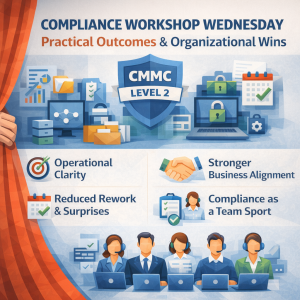
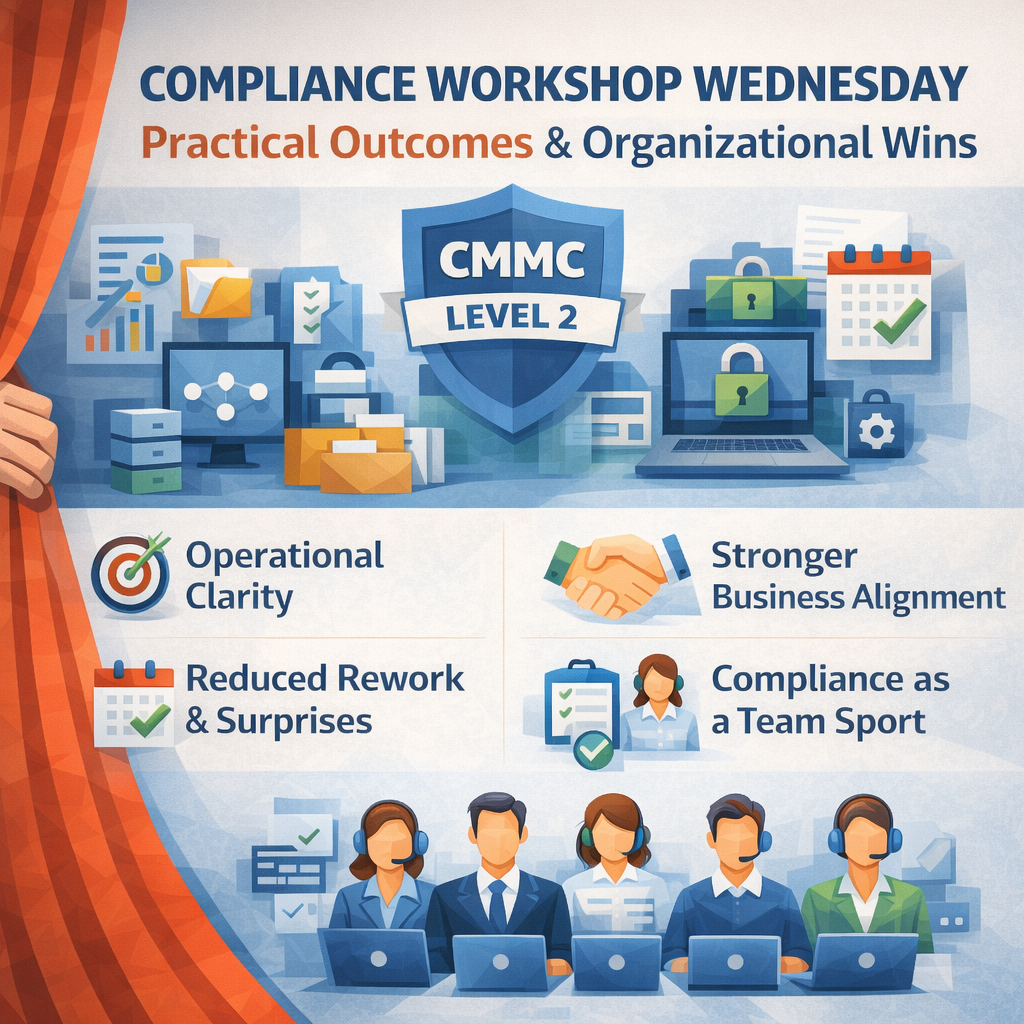
From Assessment Readiness to Operational Clarity
One of the most immediate outcomes of the CMMC Level 2 effort was clarity. The early work on scoping and documentation forced the organization to define boundaries, responsibilities, and expectations in a way that left little room for ambiguity. That clarity was not theoretical; it showed up in how teams understood what systems were in scope, which controls applied to them, and what “good” looked like in practice.
By breaking requirements down to the objective level and mapping policies and procedures together, the organization moved away from disconnected documents and toward a coherent operational narrative. That narrative made it easier for teams to explain how security controls were implemented, why they existed, and how they supported daily operations rather than disrupting them. The result was not just better assessment readiness, but a shared understanding of how the environment was designed to function.
Evidence as a Byproduct, not a Fire Drill
Another meaningful win came from how evidence was handled. Instead of treating artifacts as something to scramble for at the end, evidence was collected as part of normal operations. Screenshots, recordings, and documentation are tied clearly to specific requirements, systems, and dates. This approach reduced stress during assessment and reinforced the idea that compliance was validating an existing operating rhythm, not exposing gaps that had to be patched at the last minute.
That shift had a practical impact on teams. When evidence collection is embedded into the workflow, it becomes routine instead of disruptive. Teams spend less time recreating past decisions and more time maintaining controls that actually work. Over time, that discipline strengthens audit readiness across the board and makes future assessments more predictable and manageable.
Stronger Alignment Between Security and Business
The technical work required for CMMC Level 2 highlighted an important organizational win: tighter alignment between security controls and how the business actually operates. Rather than forcing systems into a rigid template, controls were implemented in ways that met the intent of the requirements while still supporting real‑world usage. This required teams to understand not just what the requirement said, but why it existed and how it could be applied without becoming a burden.
That alignment paid off beyond compliance. Systems designed with both security and usability in mind are easier to maintain, easier to explain, and more resilient over time. The effort to slow down, evaluate nuance, and implement controls deliberately resulted in solutions that were stronger precisely because they were practical.
Compliance as a Team Sport
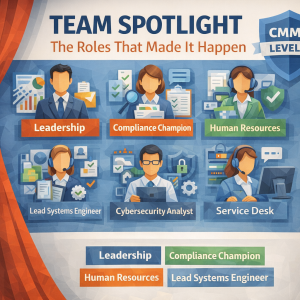
The second installment emphasized that compliance cannot live with one person or one department. One of the clearest organizational wins was seeing that principle play out in practice. Leadership treated CMMC as a business priority, not an IT project, and empowered control owners across the organization to take responsibility for their pieces of the program.
The presence of a dedicated Compliance Champion helped translate requirements into repeatable actions and kept teams aligned as work happened, not after the fact. Human Resources operationalized the people‑centric requirements, ensuring that onboarding, offboarding, training, and acknowledgments were consistent and auditable. Together, these roles reinforced a culture where security and compliance were part of how the organization operates every day.
Reduced Rework and Fewer Surprises
A less visible but equally important win was the reduction in rework. When expectations are clear, roles are defined, and evidence is tracked in real time, teams spend less energy fixing misunderstandings late in the process. Controls are implemented once, implemented correctly, and maintained intentionally. This not only supports assessment success but also reduces operational friction over the long term.
Fewer surprises during assessment are not just a morale boost, it is a signal that the organization understands its environment. That confidence comes from disciplined execution, not shortcuts.
A Foundation for What Comes Next
Perhaps the most important outcome of the CMMC Level 2 journey is the foundation it creates. Policies are clearer. Processes are repeatable. Ownership is established. Security is integrated into daily operations rather than bolted on at the end. These are wins that persist long after an assessor leaves.
CMMC compliance, when approached deliberately, becomes less about passing an assessment and more about building an organization that can explain, defend, and sustain how it protects sensitive information.
In the next installment of Compliance Workshop Wednesday, we will examine key lessons learned and how these findings contribute to sustained resilience. Effective compliance should be viewed as an ongoing process, rather than a final destination.
Questions about CMMC certification? Contact Hill Tech Solutions.